

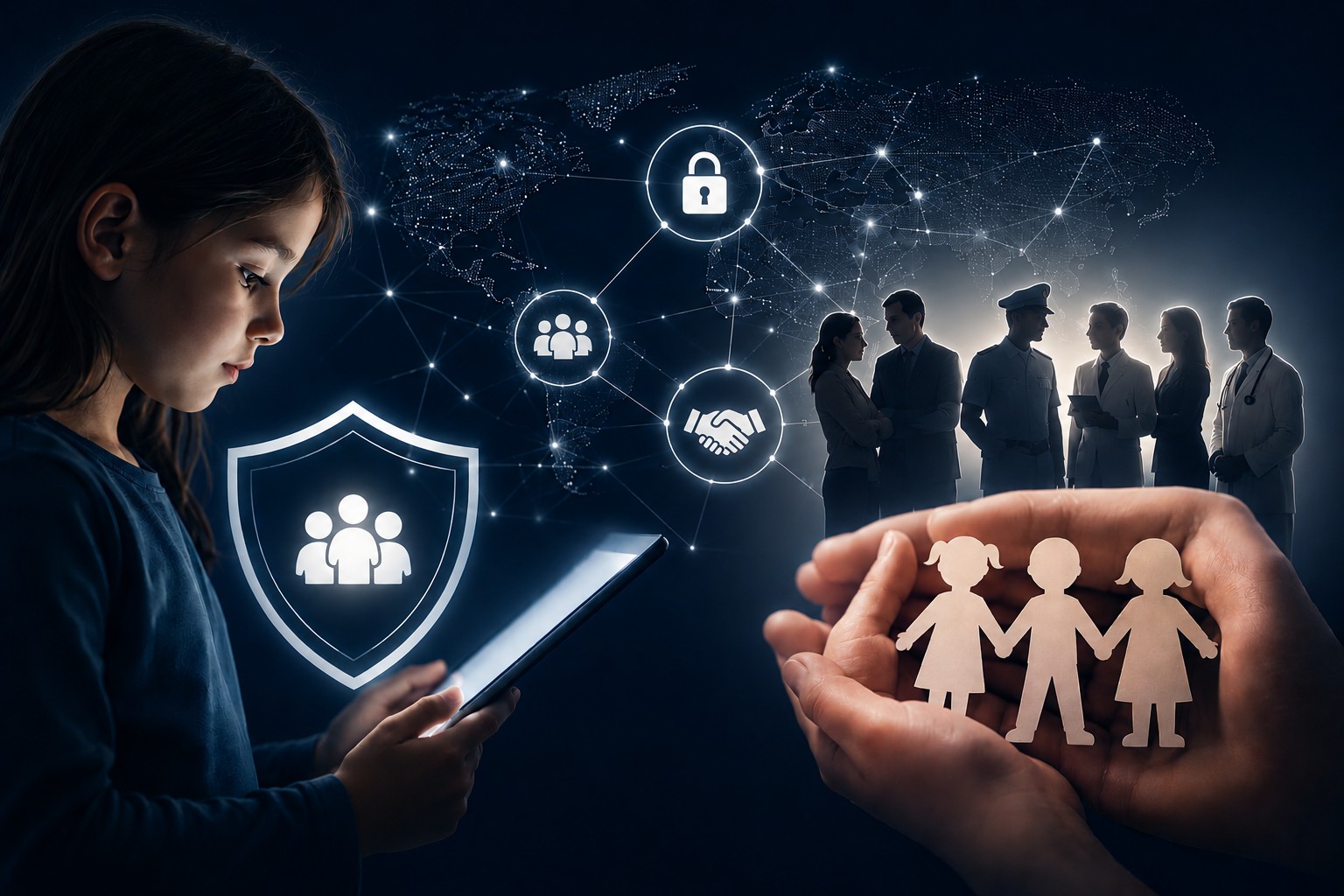
The Bureau of Market Research (BMR) recently hosted a webinar, From Insight to Action: Preventing Online Child Sexual Exploitation and Abuse in Practice. The webinar attracted professionals from across South Africa and several other countries, reflecting the growing recognition that protecting children in the digital world is both a national and global priority. Educators, healthcare professionals, psychologists, social workers, researchers, law enforcement officials, government representatives and civil society organisations all joined the conversation, united by a shared commitment to creating safer online environments for children.
| The webinar reinforced a powerful message: As online child sexual exploitation and abuse continue to grow, protecting children online requires more than awareness, it requires evidence-based, innovative prevention strategies and sustained support for the professionals dedicated to preventing, investigating and responding to these crimes. |
Setting the Scene: A Growing Digital Threat and Today’s Investigative Realities
Opening the webinar, Colonel Celeste van der Klashorst, National Commander of the South African Police Service’s Serial and Electronic Crime Investigations (SECI) Unit, provided a powerful overview of the realities investigators face in combating online child sexual exploitation and abuse (OCSEA). She explained that SECI, established in 2017, is South Africa’s specialised law enforcement unit responsible for investigating these crimes in collaboration with dedicated detectives across all provinces.
One of the most sobering statistics shared was that between January and June 2026 alone, SECI received more than 52 000 reports of online child sexual abuse and exploitation, illustrating both the growing scale of the problem and the significant pressure placed on investigators. South Africa remains one of the primary targets for online child exploitation on the African continent. The presentation highlighted several key concerns:
- Many children access the internet and social media with limited adult supervision.
- Online grooming, sextortion and child sexual abuse material continue to increase.
- Many children do not report abuse to trusted adults or authorities.
Colonel van der Klashorst also highlighted the complexity of digital investigations, which often require the analysis of millions of images and videos, advanced forensic capabilities and extensive international cooperation. She emphasised the significant psychological impact on investigators who are regularly exposed to distressing material, underscoring the need to support those working on the frontline of child protection. Her presentation concluded with a clear message, namely protecting children online requires a coordinated, multi-sector response. Effective prevention and intervention depend on strong collaboration between law enforcement, government, industry, researchers, communities and families. Law enforcement cannot combat online child exploitation alone. Recognising this, the webinar explored an innovative prevention approach that complement traditional law enforcement responses by intervening before abuse occurs.
Innovative Online Therapy to Prevent Child Sexual Abuse and Exploitation in South Africa
Drawing on more than a decade of internationally recognised research, Dr Christoffer Rahm from the Karolinska Institutet in Sweden, presented information on an innovative prevention program designed to engage individuals at risk of offending before abuse occurs. Rather than replacing law enforcement, these interventions complement traditional child protection approaches by providing confidential, evidence-based treatment pathways for people seeking help before committing offences.
The Prevent It programme, an anonymous, therapist-guided online cognitive behavioural therapy intervention supported by evidence from several randomised controlled trials, was presented as an innovative prevention approach. The programme has successfully engaged hundreds of individuals who experience unwanted sexual feelings internationally and demonstrated reductions in child sexual abuse material use, sexual preoccupation and other offence-related risk factors.
Importantly, the programme demonstrated that providing anonymous, professional support can give individuals hope and practical strategies to manage their behaviour before a child is harmed. While international research offers promising prevention models, understanding South Africa’s readiness to implement such approaches requires insight into the experiences of local psychologists working with individuals who present a risk of offending. It was this important issue that formed the focus of Mr Calvin Pienaar’s presentation, a clinical psychologist.
Addressing Gaps in the Treatment of Paedophilic Disorder in South Africa
Mr Calvin Pienaar shared findings from his research on South African psychologists’ experiences of treating paedophilic disorder. The study found that clinicians generally rely on an integrative approach, combining cognitive behavioural therapy with psychodynamic, solution-focused and strengths-based techniques. However, practice remains inconsistent because South Africa lacks standardised treatment pathways, specialist training and locally relevant clinical guidance.
The presentation also highlighted the ethical and emotional challenges faced by psychologists, including tensions between client confidentiality and child-protection responsibilities, as well as the psychological strain involved in working in a highly stigmatised field. These systemic gaps can contribute to variations in clinical confidence and practice, with some psychologists feeling insufficiently prepared to work in this highly specialised field. A central message was the need for specialised training, contextually appropriate treatment protocols, interdisciplinary collaboration and prevention-focused services that encourage people to seek help before risk escalates into offending. The research therefore reinforces the importance of developing accessible, stigma-sensitive and evidence-based intervention pathways suited to the South African context.
From Research to Practice: Building an Evidence Base for Child Protection
At the BMR, we believe that high-quality research is essential to understanding complex social challenges, informing policy, strengthening professional practice and developing effective strategies. The webinar reflected this commitment by bringing together experts from law enforcement, academia, psychology and international research institutions to examine emerging evidence and explore solutions relevant to the South African context. It also laid the foundation for future collaboration between the BMR, Karolinska Institutet the South African Police Service and other partners. These partnerships offer opportunities to adapt and evaluate internationally validated prevention programmes while generating locally relevant evidence to guide policy and practice.
Looking Ahead
Online child sexual exploitation and abuse remain a rapidly evolving child protection challenge. Addressing it requires sustained investment in research, innovation and multidisciplinary collaboration.
The BMR remains committed to generating new knowledge, evaluating innovative interventions and translating evidence into practical solutions that contribute to safer digital environments, stronger child protection systems and more effective prevention strategies. Research alone cannot solve this challenge but without research, we cannot build the evidence needed to prevent harm and protect children.
Acknowledgements
The BMR extends its sincere appreciation to:
- Colonel Celeste van der Klashorst, National Commander: Serial and Electronic Crime Investigations (SECI), South African Police Service
- Dr Christoffer Rahm, Karolinska Institutet, Sweden
- Mr Calvin J. Pienaar, Clinical Psychologist, South Africa
For any enquiries, please contact Dr Antoinette Basson, Research Director, Bureau of Market Research (BMR), at abasson@bmr.co.za.
Compiled by: Dr Antoinette Basson
24 July 2026