

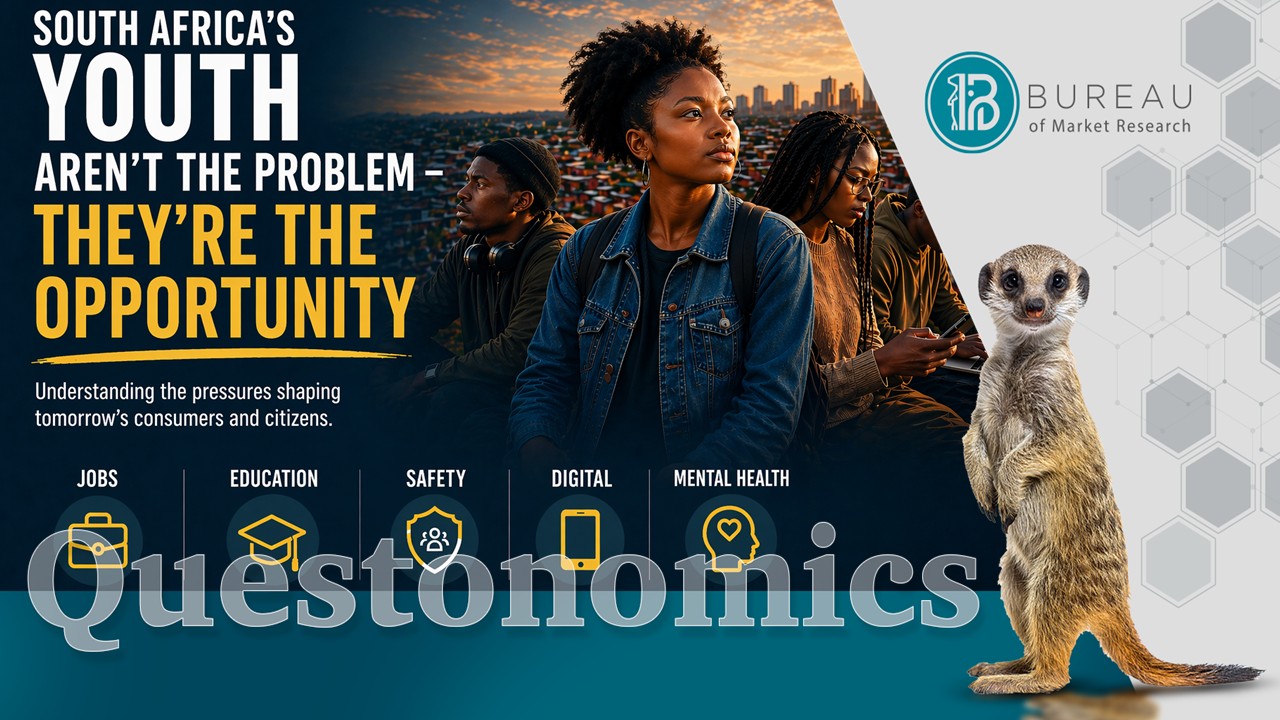
Behind every youth statistic lies a story of resilience, innovation, and untapped potential.
When discussions about young people in South Africa arise, the focus often falls on statistics such as unemployment, school dropout rates, or crime exposure. While these figures are important, they only tell part of the story. Behind the numbers is a generation adapting to complex realities and reshaping how they learn, work, earn, and participate in society. Understanding these experiences is essential because today’s youth are tomorrow’s workforce, entrepreneurs, consumers, and leaders.
A Generation Shaped by Challenge and Opportunity
South African youth are growing up at the intersection of constraint and aspiration.
Economic pressures have encouraged many young people to explore alternative ways of earning an income, from side hustles to informal and digital work opportunities. Rather than reflecting a lack of ambition, these choices demonstrate adaptability and resilience in a difficult environment.
At the same time, disruptions in education have led many young people to develop skills through a mix of formal learning, online courses, and self-directed education. This has created a generation that is resourceful and eager to learn, although often not fully aligned with the requirements of the formal labour market. Social and economic pressures have also fostered resilience, but often at a psychological cost. Many young people face ongoing stress, uncertainty, and anxiety while navigating increasingly complex environments.
The Rise of a New Youth Consumer
These experiences are shaping a new type of consumer; one who is practical, digitally connected, and highly aware of value.
Young consumers are becoming more price-conscious and are increasingly looking for affordable, flexible, and multifunctional products and services. They are deeply influenced by digital platforms and global trends, yet many still face barriers such as expensive data, limited access to devices, and uneven digital skills. Trust is also becoming a defining factor. Young people are more likely to support brands and institutions that demonstrate authenticity, transparency, and a genuine understanding of their realities.
Looking Ahead
The future societal profile of South African youth is likely to be defined by several key characteristics:
- Economically adaptable but still facing structural barriers.
- Digitally connected but not always empowered to participate fully.
- Socially aware, yet increasingly sceptical of institutions.
- Resilient, but under growing psychological pressure.
- Entrepreneurial, with strong ambitions but limited access to resources and opportunities.
These trends are already influencing how young people engage with education, employment, technology, and the economy.
From Constraint to Capability
The real opportunity lies not in focusing solely on youth challenges, but in enabling youth potential.
This means creating stronger pathways between education and employment, expanding meaningful digital inclusion, supporting entrepreneurship, and prioritising mental health and well-being.
South Africa’s future growth and competitiveness will depend on how effectively young people are supported to move from survival-driven adaptation to meaningful participation and long-term empowerment. The challenges facing youth today are not simply social issues; they are indicators of the future direction of our economy and society. By understanding these realities now, businesses, policymakers, and communities can help unlock the full potential of South Africa’s next generation.
We welcome your comments and invite you to share your views on our Facebook page.
Compiled by: Prof DH Tustin and Dr A Basson
15 June 2026