

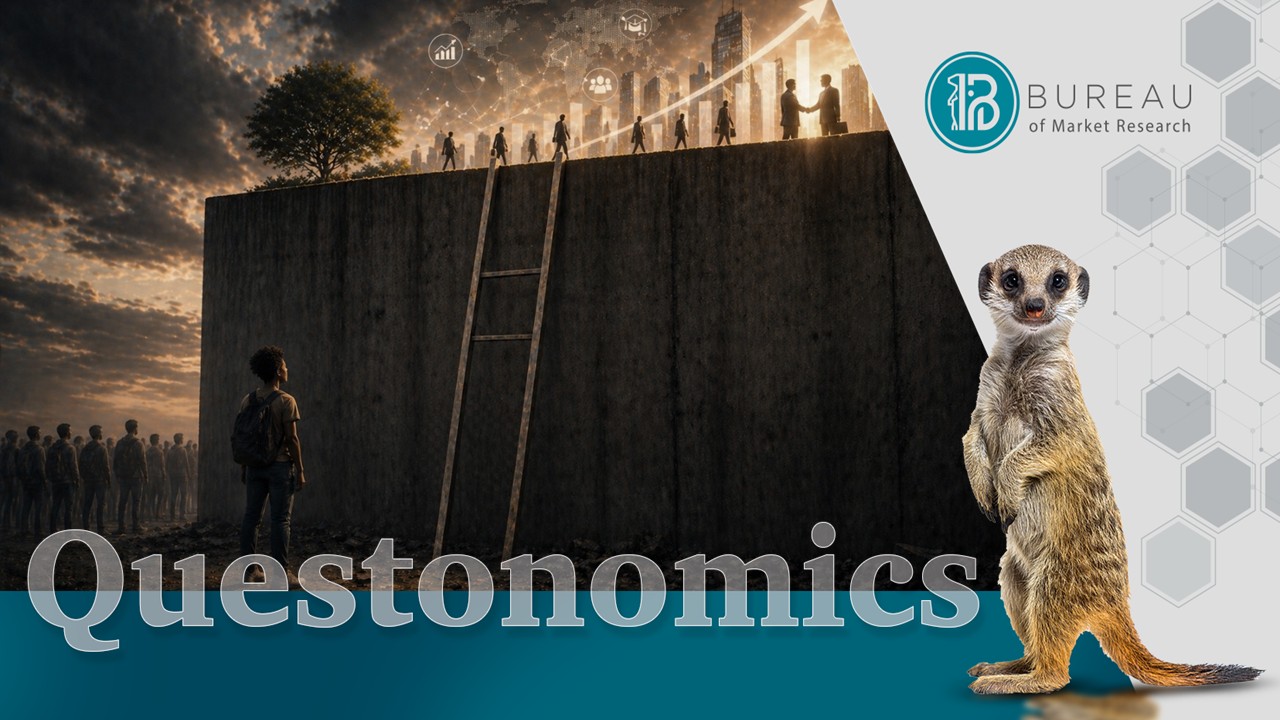
We often talk about climbing the ladder of opportunity. But what happens when the first step is no longer within reach?
Every year on 1 May, South Africa marks Workers’ Day, a moment grounded in history, in struggle, and in the belief that work carries dignity. At its core, the day has never simply been about recognising those who are employed. It has always stood for something more fundamental, the right to work, the value of economic participation, and the idea that opportunity should be within reach.
But in 2026, that idea feels increasingly under pressure.
South Africa’s unemployment rate remains above 32%, with youth unemployment exceeding 60% among those aged 15–24. What we continue to see in the data is not only a shortage of jobs, but a deeper issue of access. For many young people, the challenge is no longer about building a career. It is about reaching that first opportunity at all. The lowest rung of the ladder, once assumed to be a starting point, is becoming harder to access, and in some cases, is moving further away.
Part of this shift is structural. As industries evolve and Artificial Intelligence (AI) becomes more embedded in everyday operations, many entry level roles are not disappearing overnight, but are quietly transforming. Tasks that once created opportunities for early work experience are being streamlined, automated, or absorbed into more complex roles that demand higher levels of skill. From a market perspective, this reflects progress, efficiency, and the natural evolution of an economy adapting to global change.
However, progress does not automatically translate into participation.
Across labour insights and economic trends, a consistent pattern is emerging. While the demand for skills is increasing, access to those skills is not expanding at the same pace. A growing share of jobs now requires digital and advanced capabilities, yet large segments of the youth population remain excluded from these pathways. The result is a widening distance between those who can step forward and those who cannot.
For the economy, this widening gap has direct implications. A workforce that cannot access entry points cannot fully participate, and without participation, long term growth becomes constrained. Businesses may benefit from efficiency gains in the short term, but over time, a smaller base of economically active consumers limits demand, slows market expansion, and places pressure on sustainable growth.
Work is also closely tied to wellbeing. It provides structure, purpose, and a sense of belonging. When access to work becomes limited, the impact extends beyond income into confidence, mental health, and long-term participation in society. Over time, this does not only affect individuals, but the stability and resilience of the broader economic environment.
This is where the meaning of Workers’ Day becomes more complex.
If the day is rooted in the dignity of work and the right to access it, then it cannot only reflect those who are already within the system. It must also account for those standing just outside it, those for whom the first step is no longer guaranteed. The conversation shifts from recognising work to understanding how access to it is changing, and what that means for the future of both people and markets.
So, what does Workers’ Day mean when the first step onto the ladder is out of reach? Perhaps it is no longer just a moment to reflect on the workforce as it exists today, but a moment to confront what happens when access to that workforce begins to narrow. Because a ladder only works if people can step onto it. And if that first step keeps moving further away, then it is not only opportunity that is at risk, but the future of the very economy that depends on it.
We welcome your comments and invite you to share your views on our Facebook page.
Compiled by: Ms Z Janz
30 April 2026