

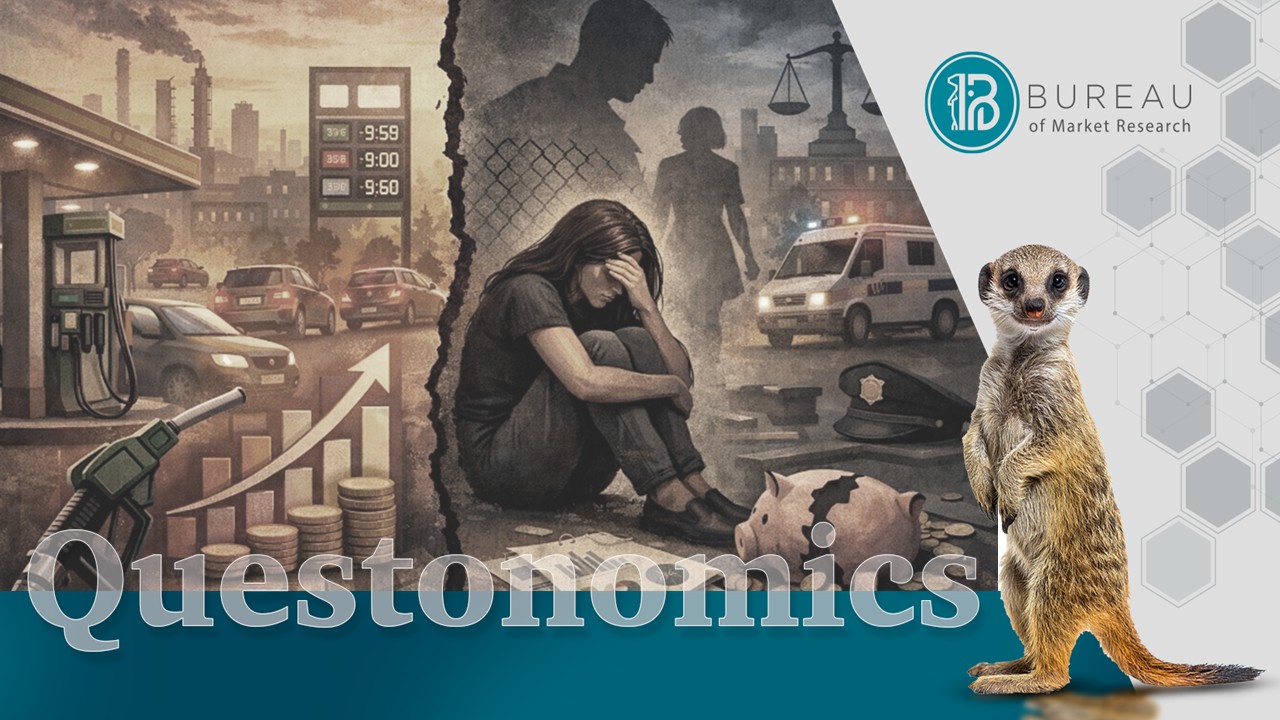
In a country fixated on visible price hikes, the true economic burden lies in what silence continues to conceal.
April in South Africa brings two parallel realities:
- One visible, measurable, and loudly debated, namely petrol price hikes.
- The other remains largely uncounted and absorbed in silence, namely Sexual Assault Awareness Month.
While rising fuel costs dominate headlines and public conversations, gender-based violence (GBV) remains comparatively under-discussed in economic terms. Yet its impact extends far beyond the social sphere.
KPMG South Africa estimates that GBV costs the economy between R28 billion and R42 billion annually, or 0.9% to 1.3% of GDP. In a country already facing constrained growth and high unemployment, this represents a substantial and largely under-recognised economic burden for both the South African macroeconomy as well as for businesses, households and individuals at a micro-level. These costs manifest in multiple ways, including:
- Direct impacts: Research indicates that survivors of sexual violence may experience sustained income loss over time through reduced productivity, time away from work or long-term disruptions to employment. In some cases, this is compounded by additional financial pressures linked to unplanned life circumstances.
- Indirect impacts: This includes reduced female labour force participation, decreased gender equality, lower educational attainment (especially for women and children in affected households), skills erosion due to long-term trauma, reduced lifetime earnings as well as intergenerational effects in the sense that children who are exposed to gender-based violence have lower school performance and higher likelihood of violence later.
- Systemic costs: Healthcare services, policing, legal systems and social support structures absorb significant and ongoing strain, requiring both public and private sector resources.
Yet beyond these measurable effects lies a less visible, but equally important dynamic, namely the economic consequences of perceived risk.
On a daily basis, many women make economic decisions shaped not only by opportunity, but by considerations of safety. This influences job selection, mobility, working hours and sector participation, with some roles, locations, or shifts effectively excluded. Over time, these patterns begin to shape broader economic outcomes.
Labour participation is constrained, talent pipelines narrow, consumer behaviour shifts and even patterns of urban economic activity are affected.
In effect, a “shadow economy” emerges – one where risk mitigation quietly determines how and where economic participation occurs.
For businesses, this is not an abstract issue. It translates directly into measurable costs, i.e. lower workforce participation, reduced productivity, higher levels of absenteeism, lower levels of talent retention, particularly for roles requiring mobility or non-standard hours. It also shapes the environments in which employees operate and the decisions they are able, or willing, to make.
And yet, unlike fuel price increases, where the impact is immediate and widely understood – prompting visible adjustments from businesses, consumers, and policymakers, the costs of GBV are rarely tracked in real time or fully accounted for in economic decision-making.
They are diffused, indirect, and often absorbed without visibility. The difference is not in the scale of impact, but in how visible that impact is.
This April, as South Africa once again responds to the pressure of rising fuel prices, a more difficult question remains:
If visible costs trigger immediate response, what happens to those that remain largely unseen?
Because the reality is that South Africa is already paying for GBV directly, indirectly and systemically as indicated above, but also far too often, in lives. We just haven’t fully decided to count the hidden cost of silence.
We welcome your comments and invite you to share your views on our Facebook page.
Compiled by: The Bureau of Market Research
2 April 2026